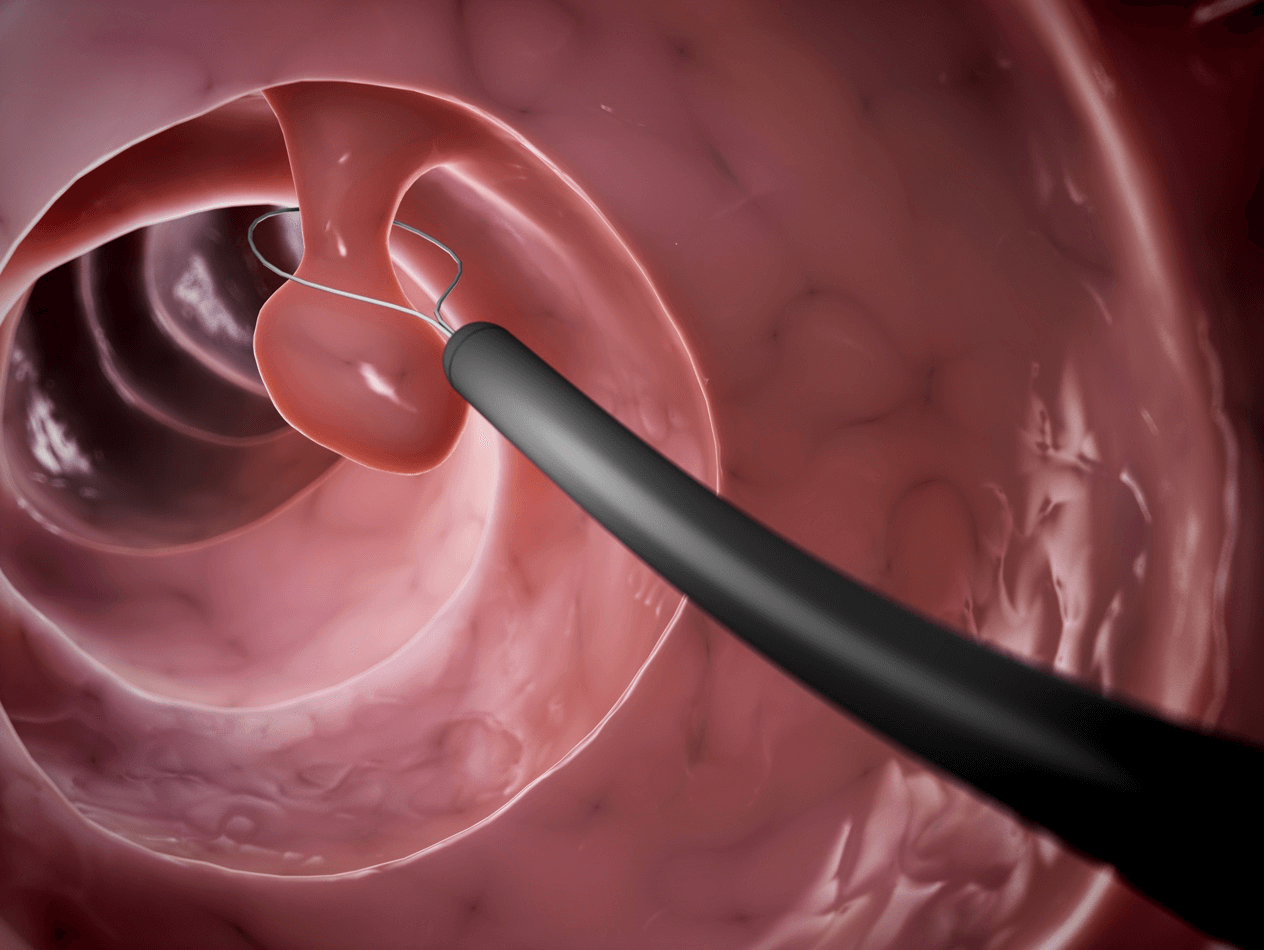
A polyp is a small growth arising from the lining of the bowel. They are made up of cells which have multiplied to cause a small growth and vary in size between a few millimetres up to a few centimetres. They are more common in people aged 60 and over. Most polyps do not cause any symptoms, however, they can sometimes lead to bleeding, anaemia (low blood levels) and a change in bowel habit. Most polyps are benign but some types of polyps called adenomas have features which may develop into bowel cancer over years. For this reason, when a polyp is found, its surface is examined carefully and if there are features of an adenoma, it is removed and retrieved (usually during the same procedure). The polyp is sent for further microscopic analysis with the results available a few days later. Polyps can vary in appearance and are sometimes on a stalk or appear flat along the bowel lining. Generally, the larger polyp, the greater the risk of becoming cancerous. Once a polyp is found and treated, it is usual practice to undergo repeat surveillance with colonoscopy after a number of years. This is to check and treat for any further polyps which may have developed in the meantime.